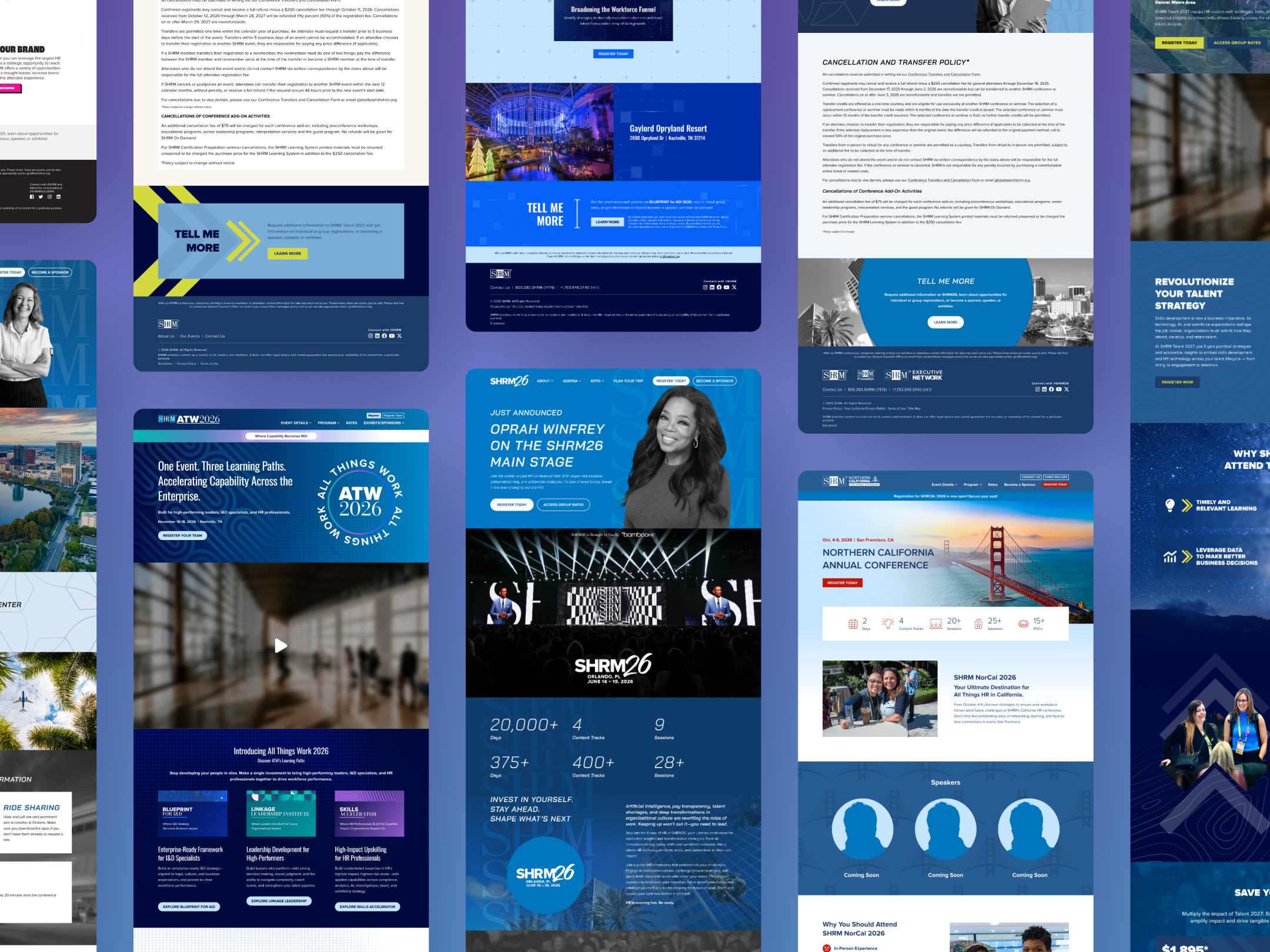
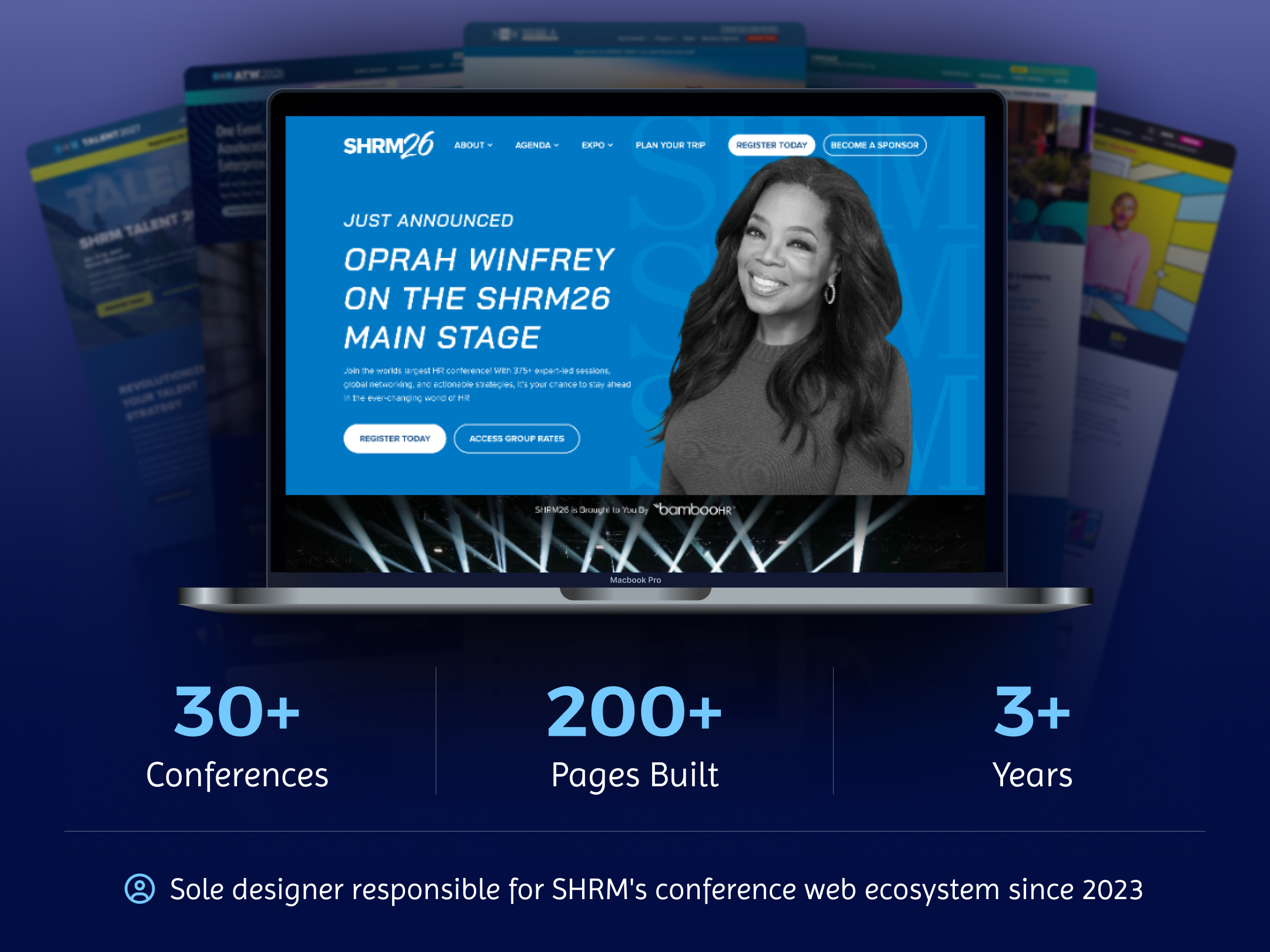
Hundreds of Designs. Years of Success.
Conference Websites
Years
Pages
Designer
Over three years, this approach evolved into a repeatable design system supporting more than 30 conference websites across SHRM's portfolio. The system reduced duplication, accelerated production timelines, improved consistency across experiences, and simplified developer handoff. Most importantly, it enabled a single designer to support a growing conference ecosystem without compromising quality. Today, every new conference benefits from a foundation that is faster to build, easier to maintain, and flexible enough to support a wide range of event brands.
When I joined the project, there was no unified design system. Conference websites were built independently, design files were inconsistent, and common patterns were recreated from scratch for every event. The challenge wasn't simply creating attractive websites—it was maintaining quality, consistency, and speed across 30+ conferences while ensuring each event still felt unique and aligned with its individual brand. With 8–12 major conferences launching every year, inefficiency quickly became a scalability problem.
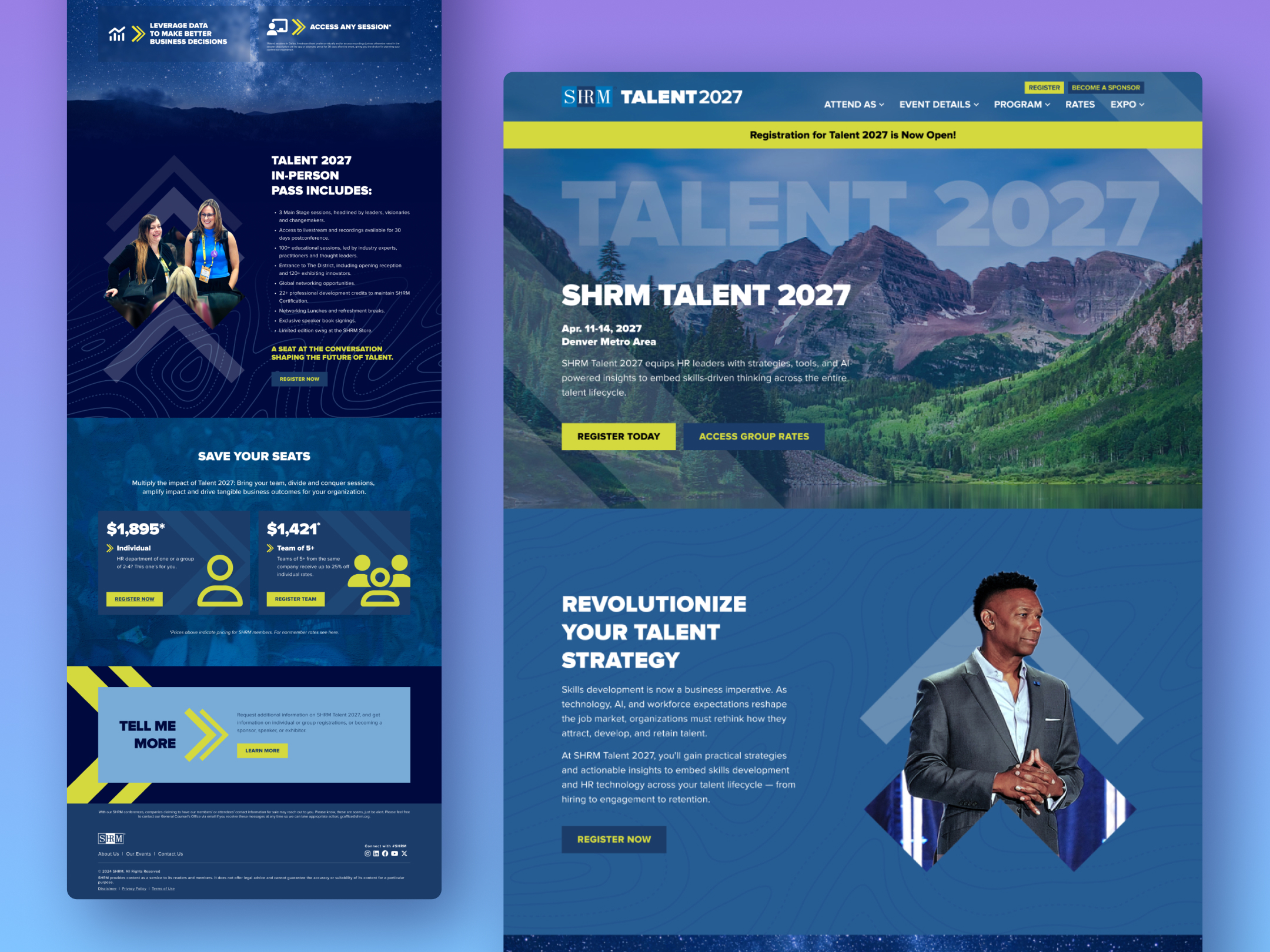
Rather than pausing delivery to rebuild the system, I introduced structure while continuing to ship conference websites on schedule. I developed a custom Figma component library built specifically around SHRM's conference ecosystem. Common patterns—including navigation systems, hero sections, content layouts, registration modules, sponsor blocks, and rate cards—were transformed into reusable components that could be adapted for each event. This approach created a scalable foundation that improved efficiency without sacrificing creative flexibility. New conferences could launch from an established system while still expressing their own identity.
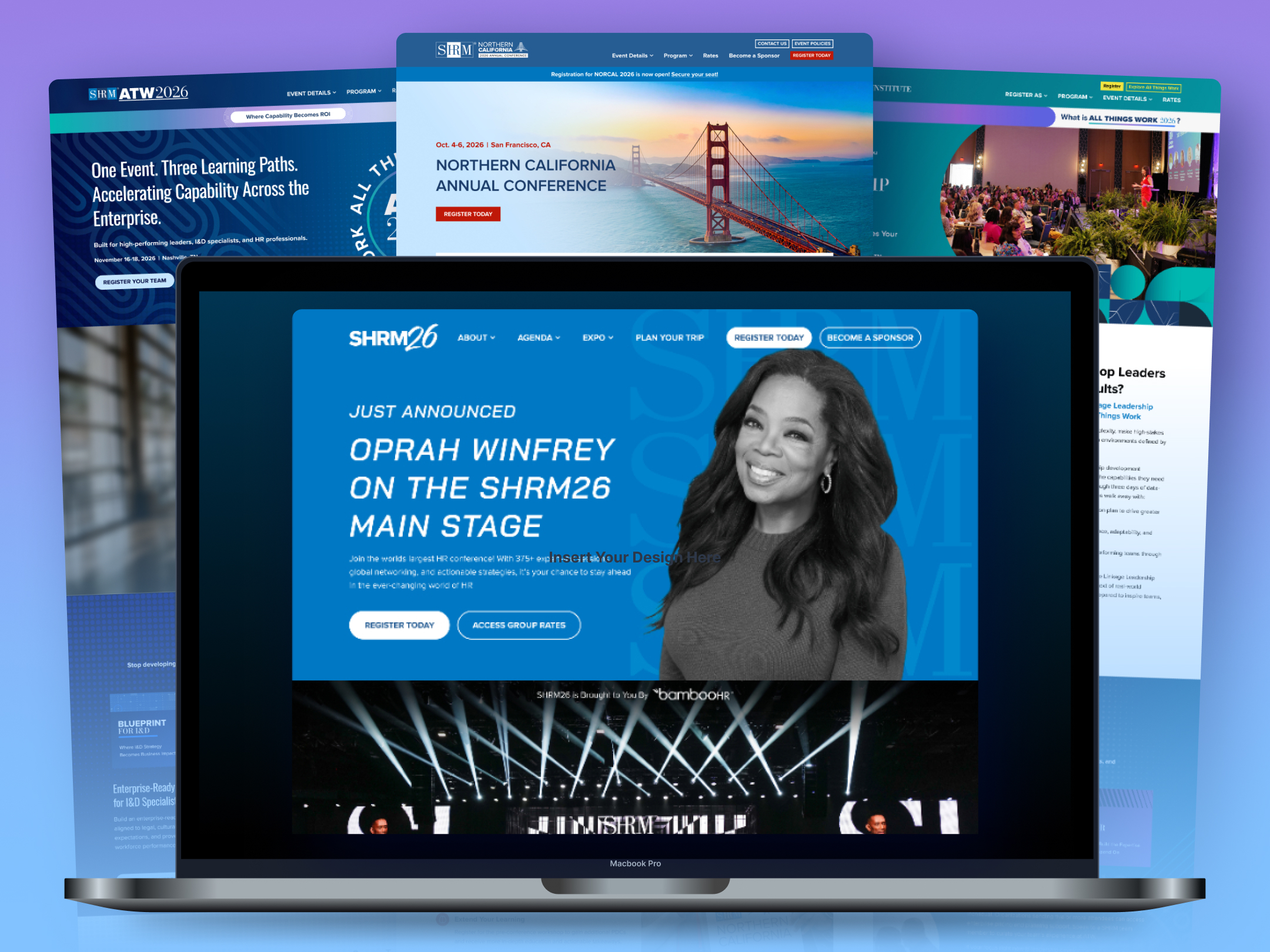
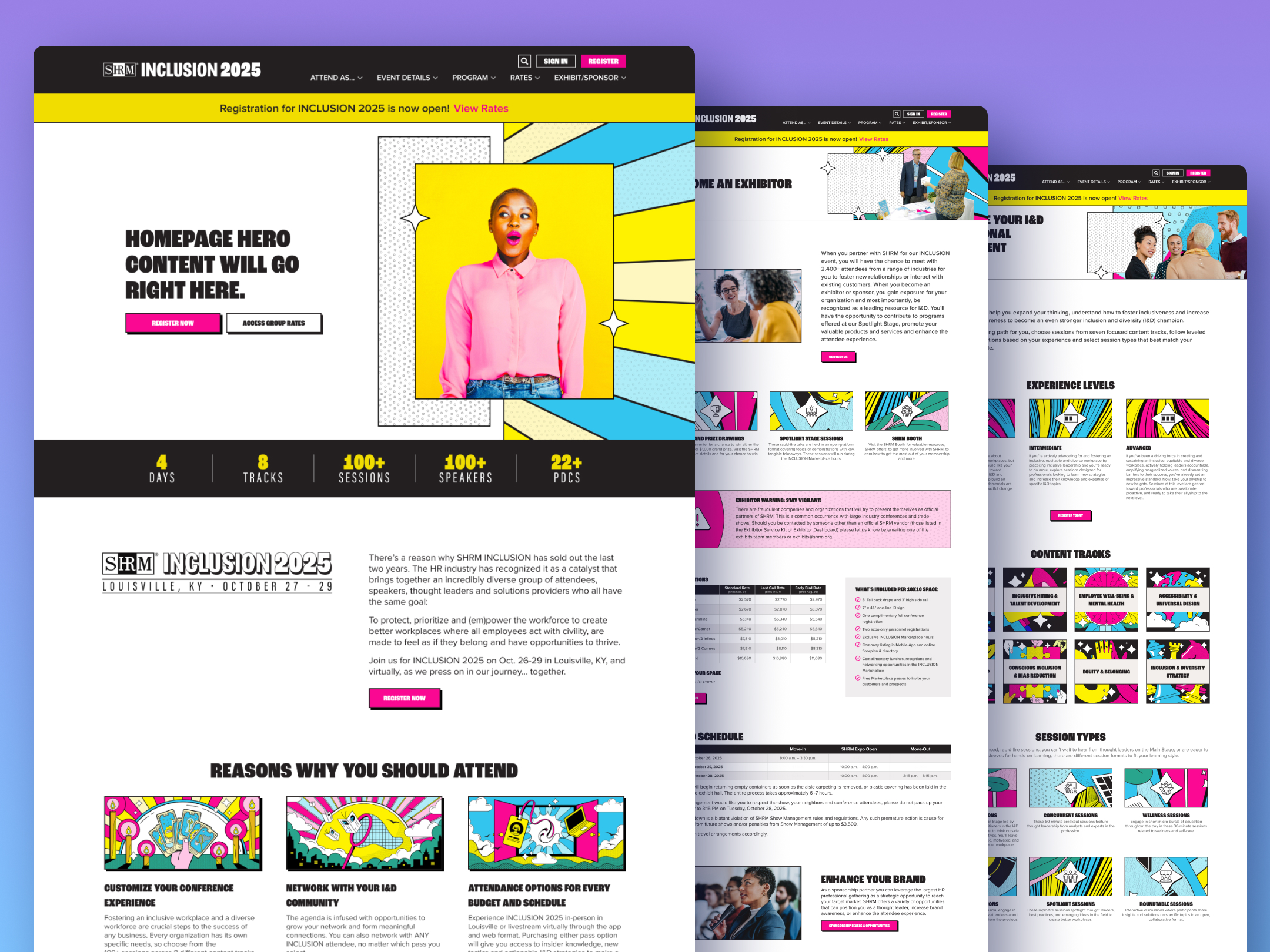
As the lead designer, I own the design process end-to-end. From interpreting new event branding to delivering responsive page designs and component specifications, every conference website passes through my hands. Deliverables typically include: Homepage design Program and agenda pages Registration and pricing experiences Sponsor and exhibitor content Supporting microsites and landing pages Responsive design specifications Development handoff documentation Despite sharing a common foundation, every conference receives a distinct visual treatment tailored to its audience and goals.
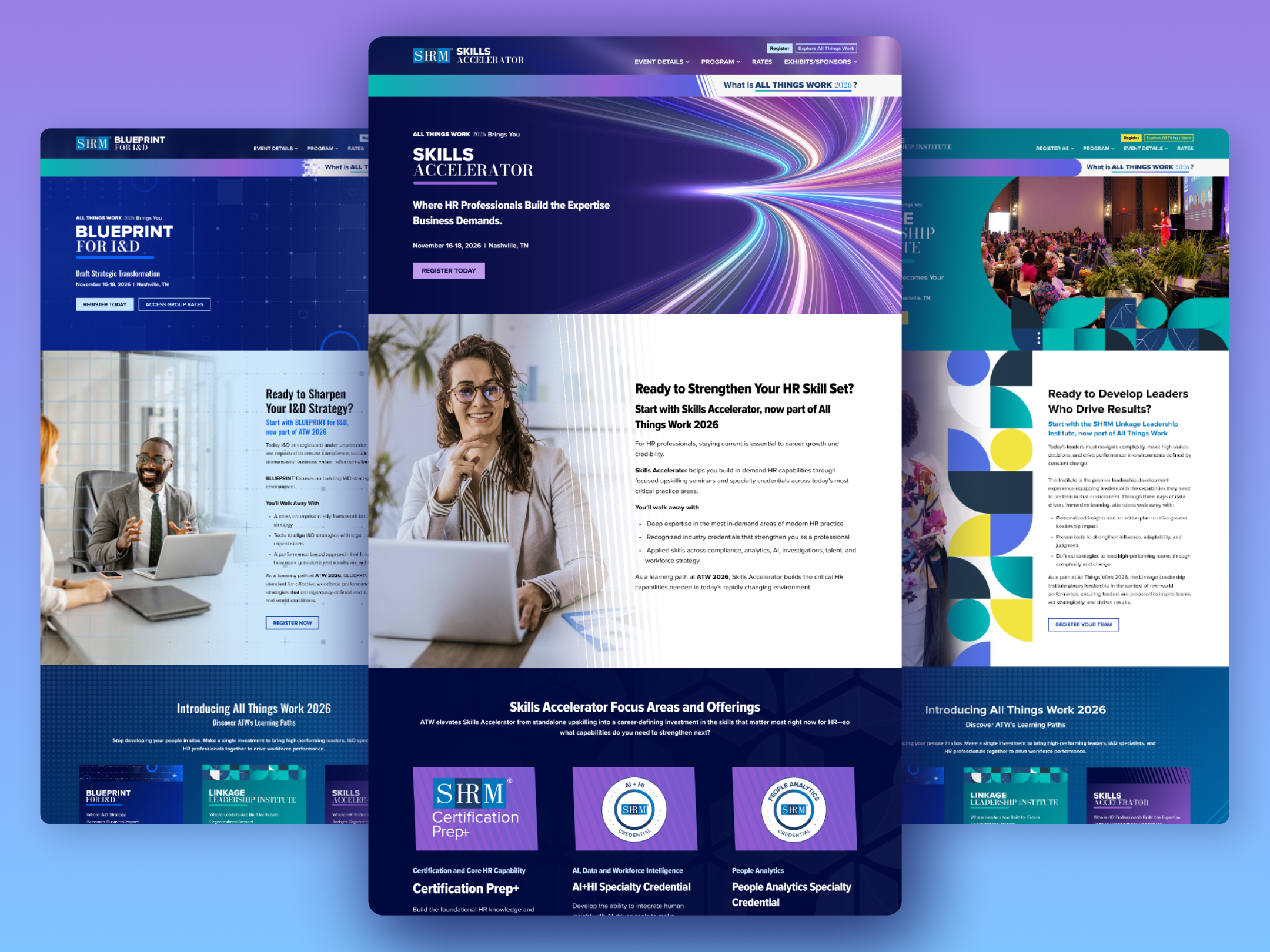
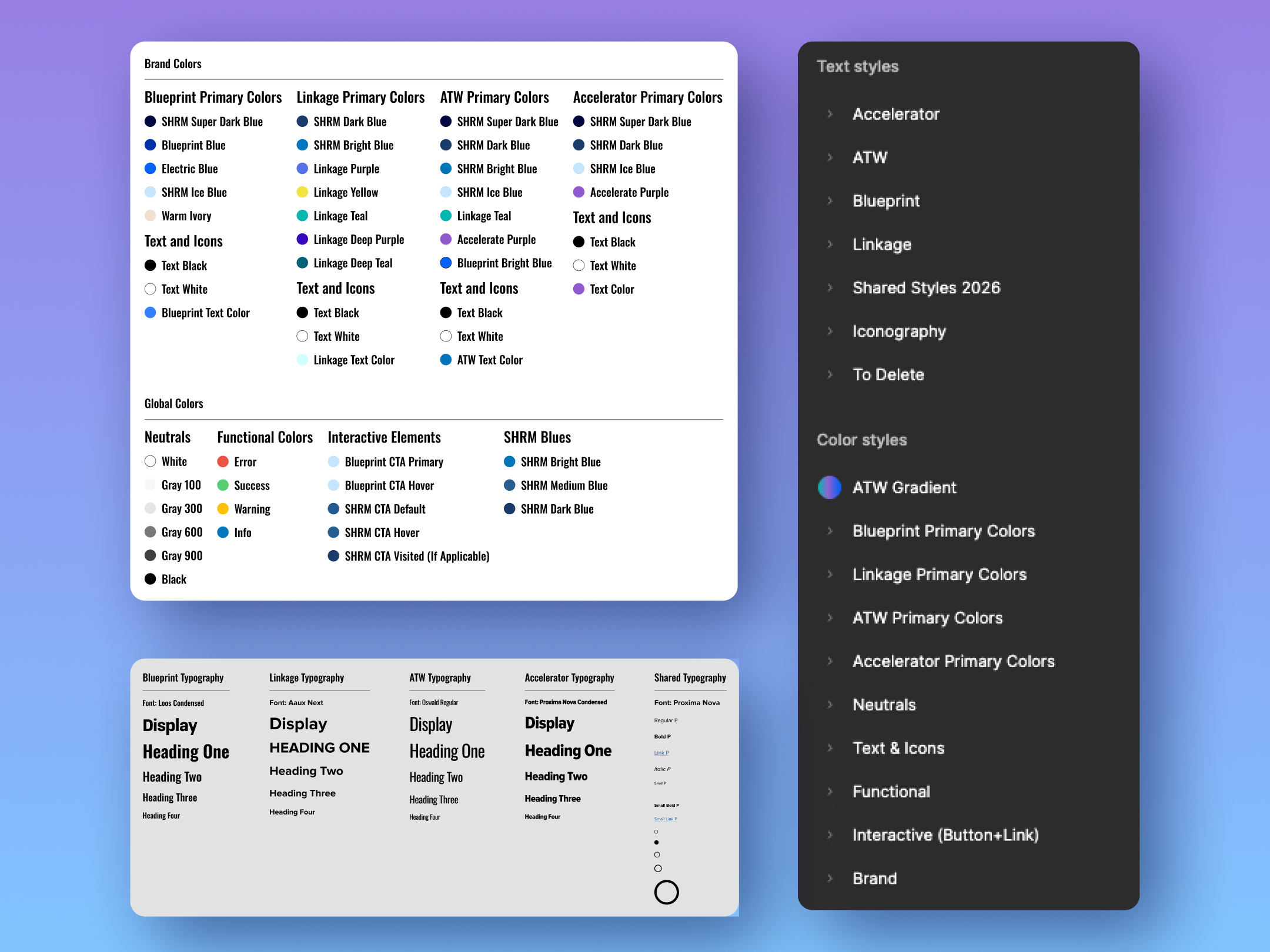
Over three years, this approach evolved into a repeatable design system supporting more than 30 conference websites across SHRM's portfolio. The system reduced duplication, accelerated production timelines, improved consistency across experiences, and simplified developer handoff. Most importantly, it enabled a single designer to support a growing conference ecosystem without compromising quality. Today, every new conference benefits from a foundation that is faster to build, easier to maintain, and flexible enough to support a wide range of event brands.